MIDI to Sheet Music

Drop a .mid file to render it as readable sheet music.
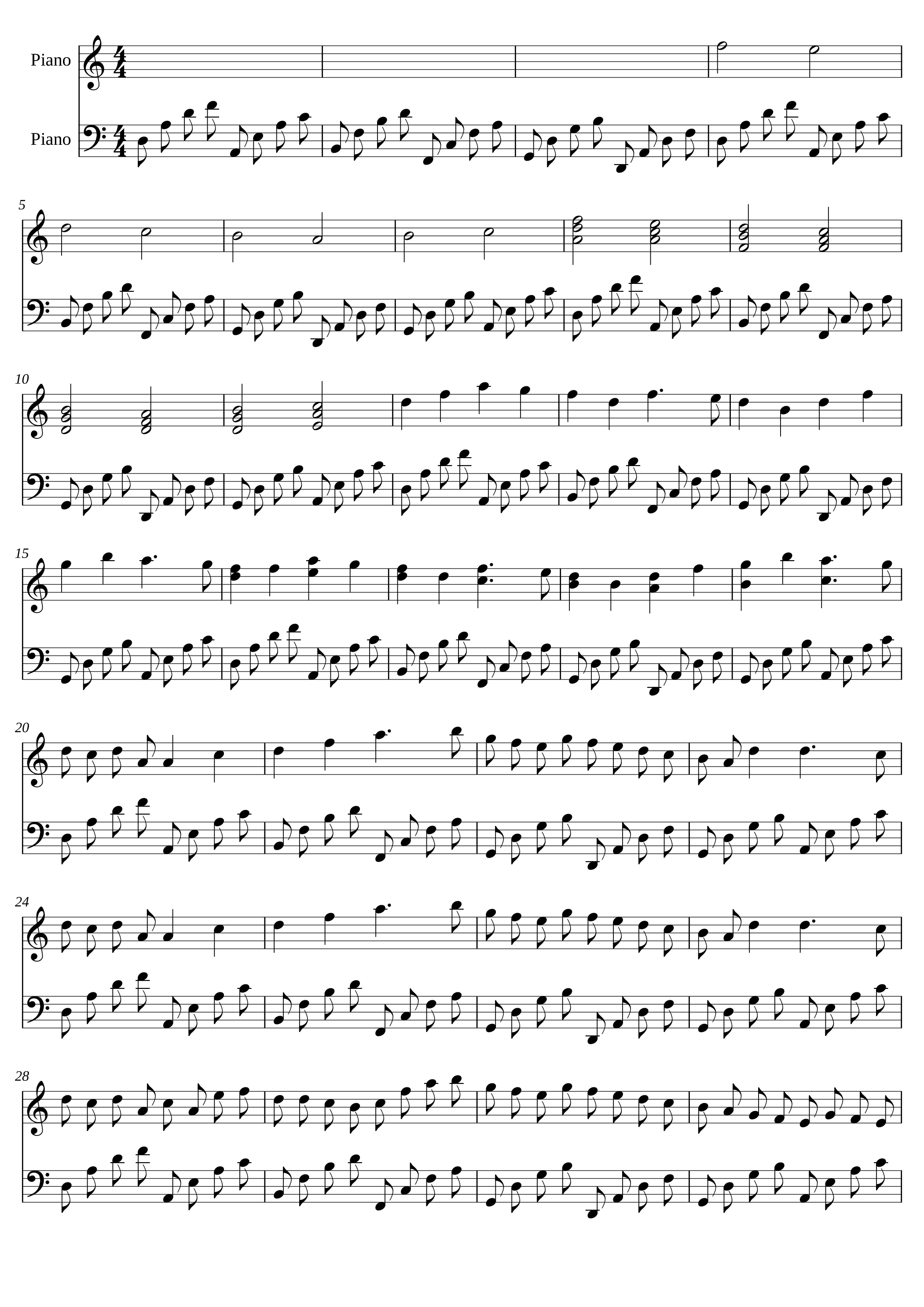
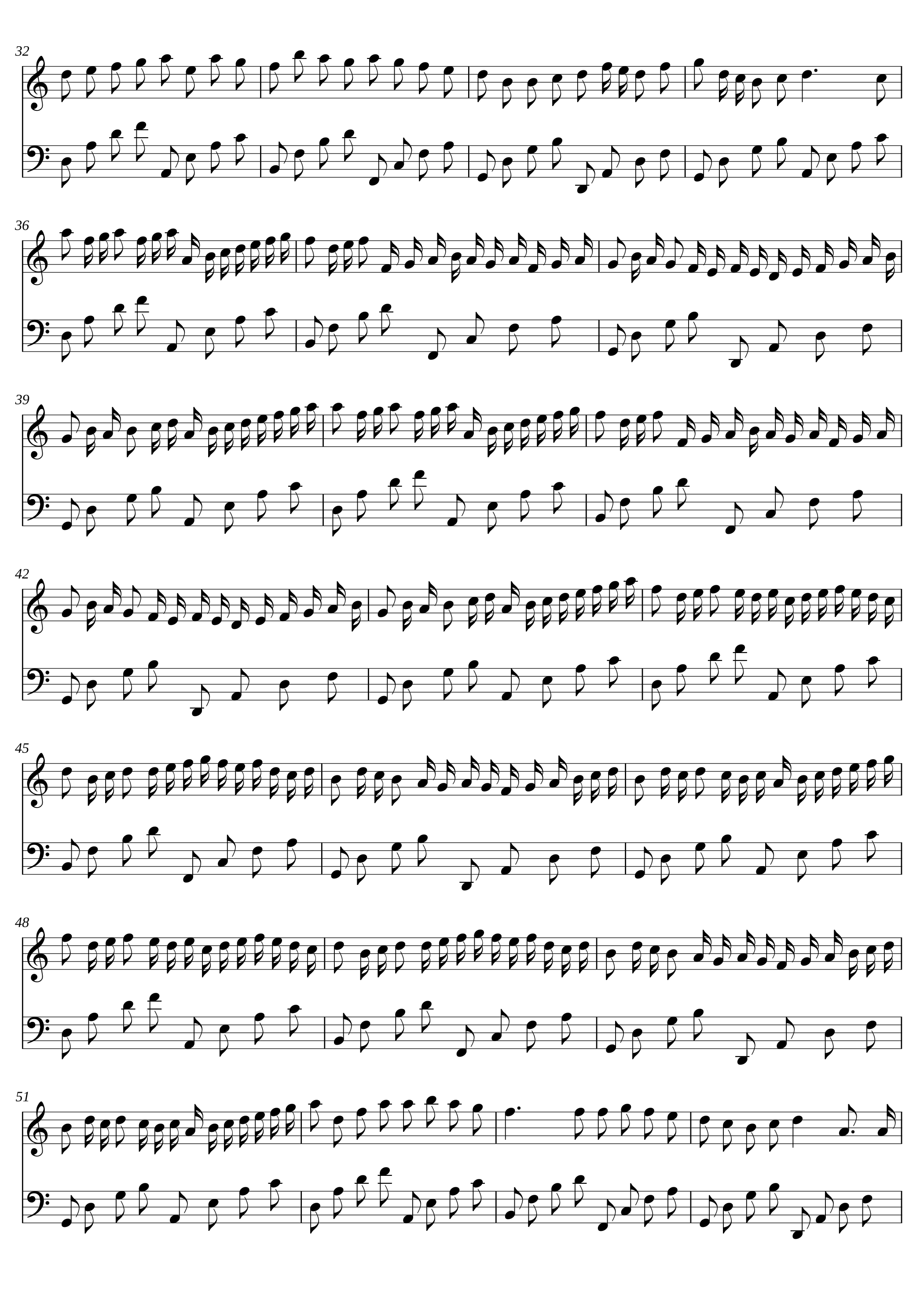
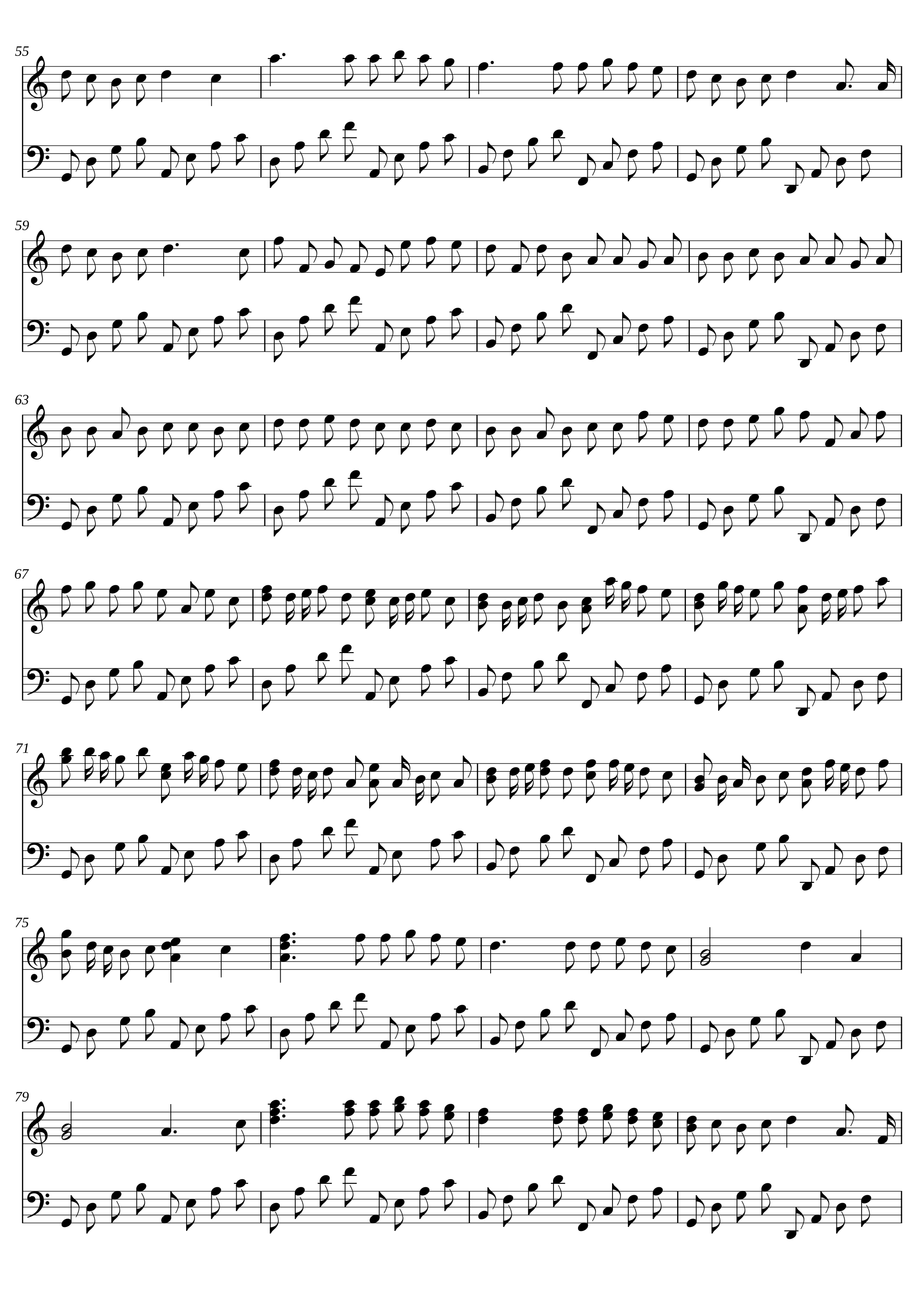
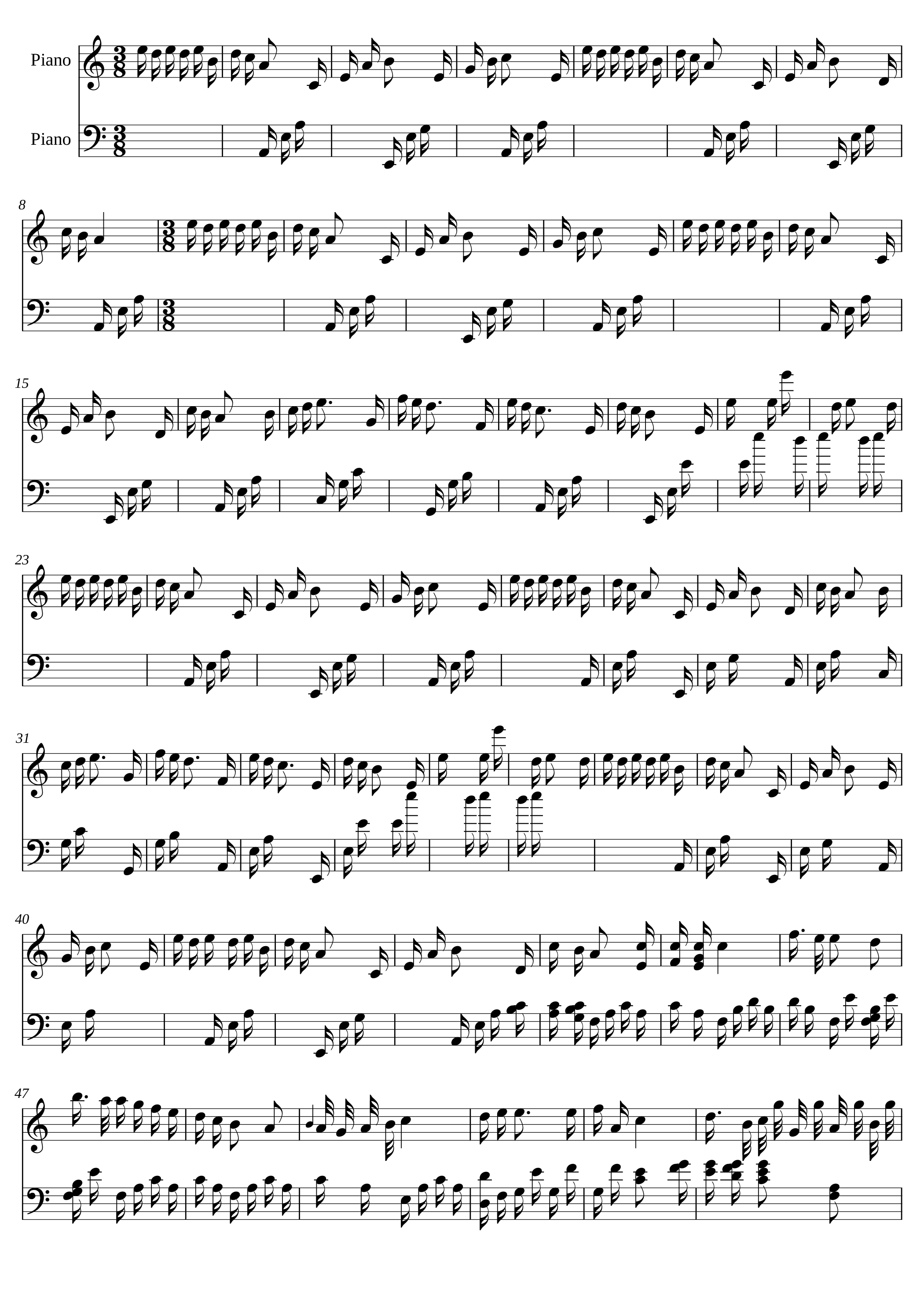
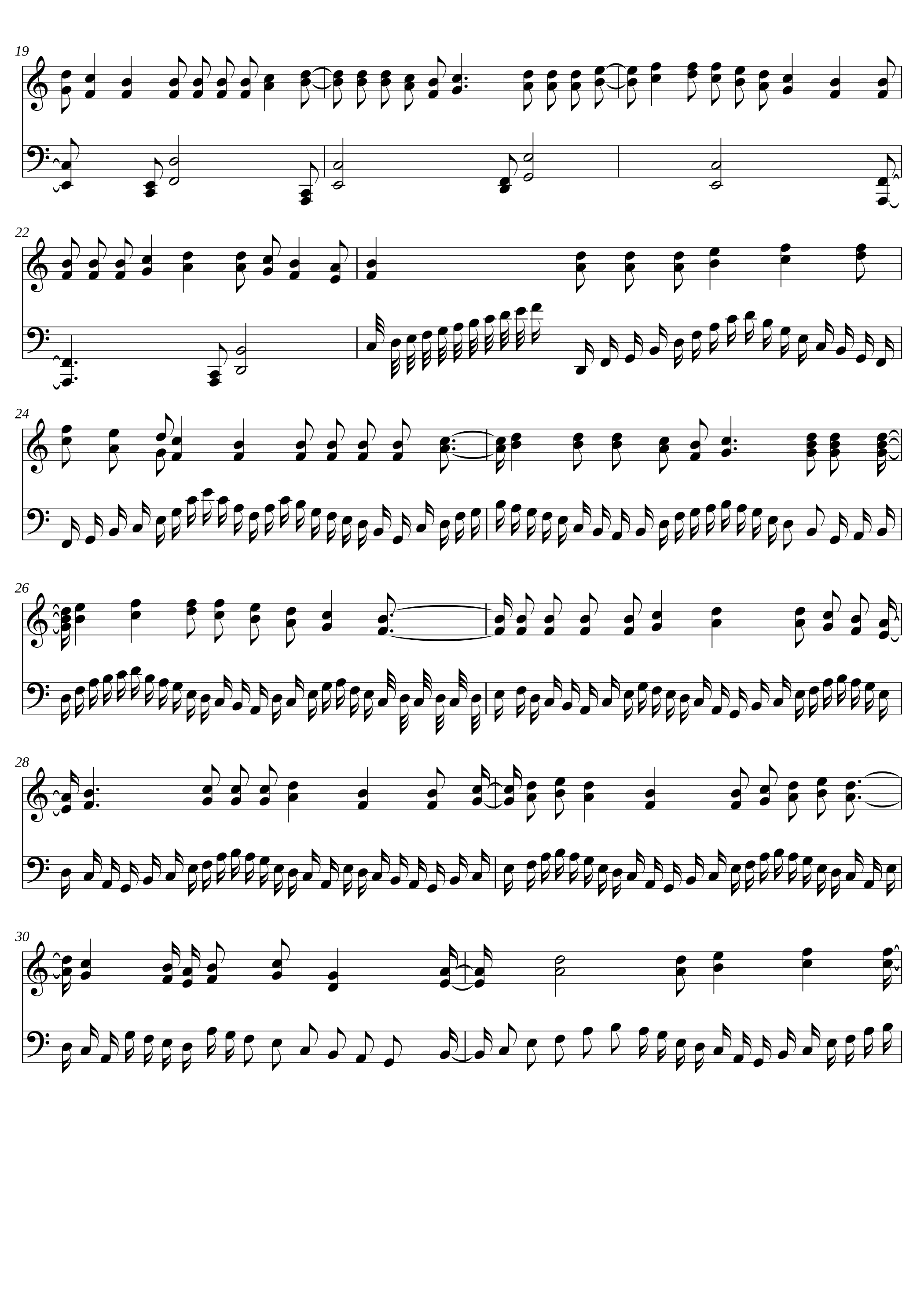
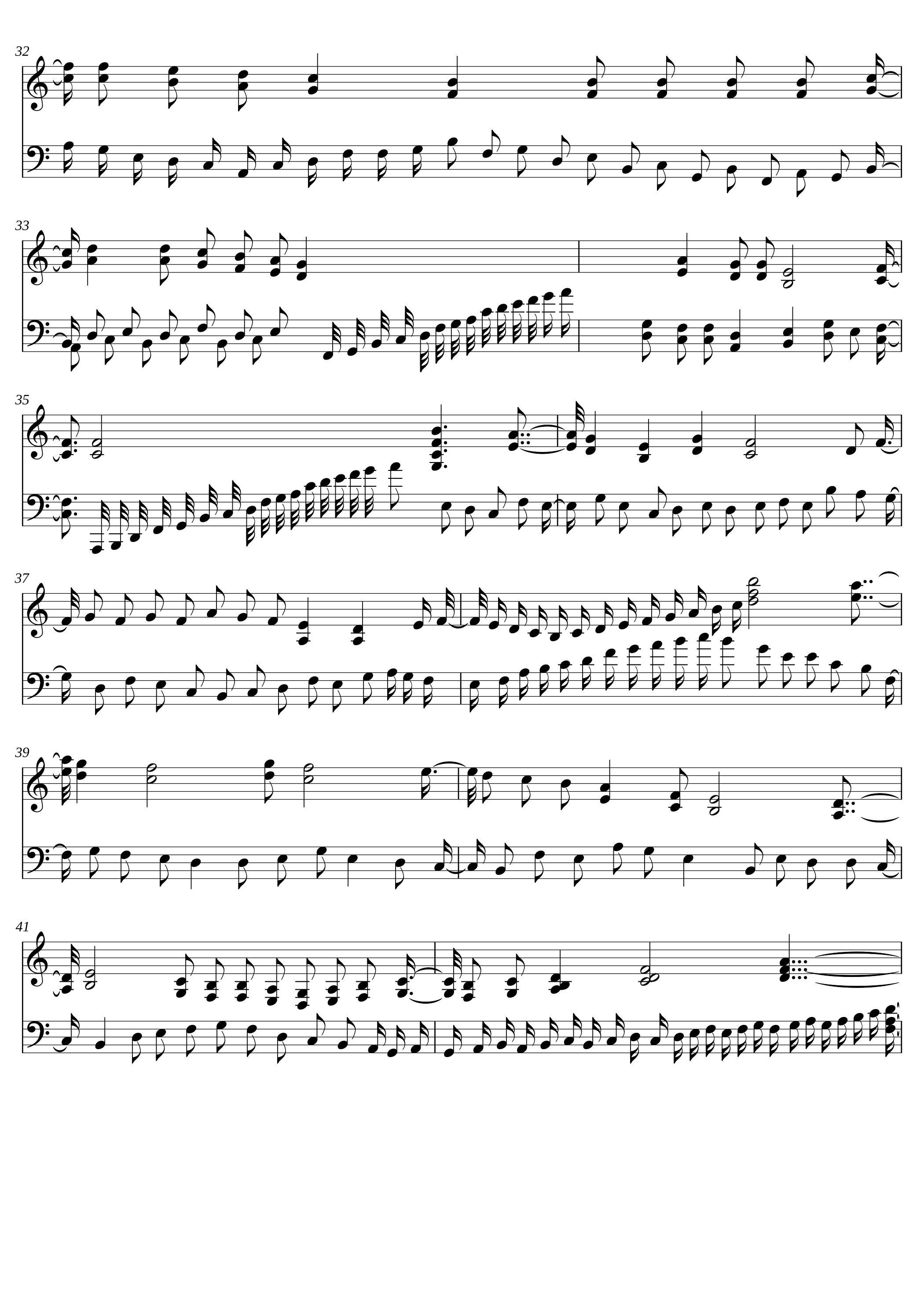
Canon in D page 1
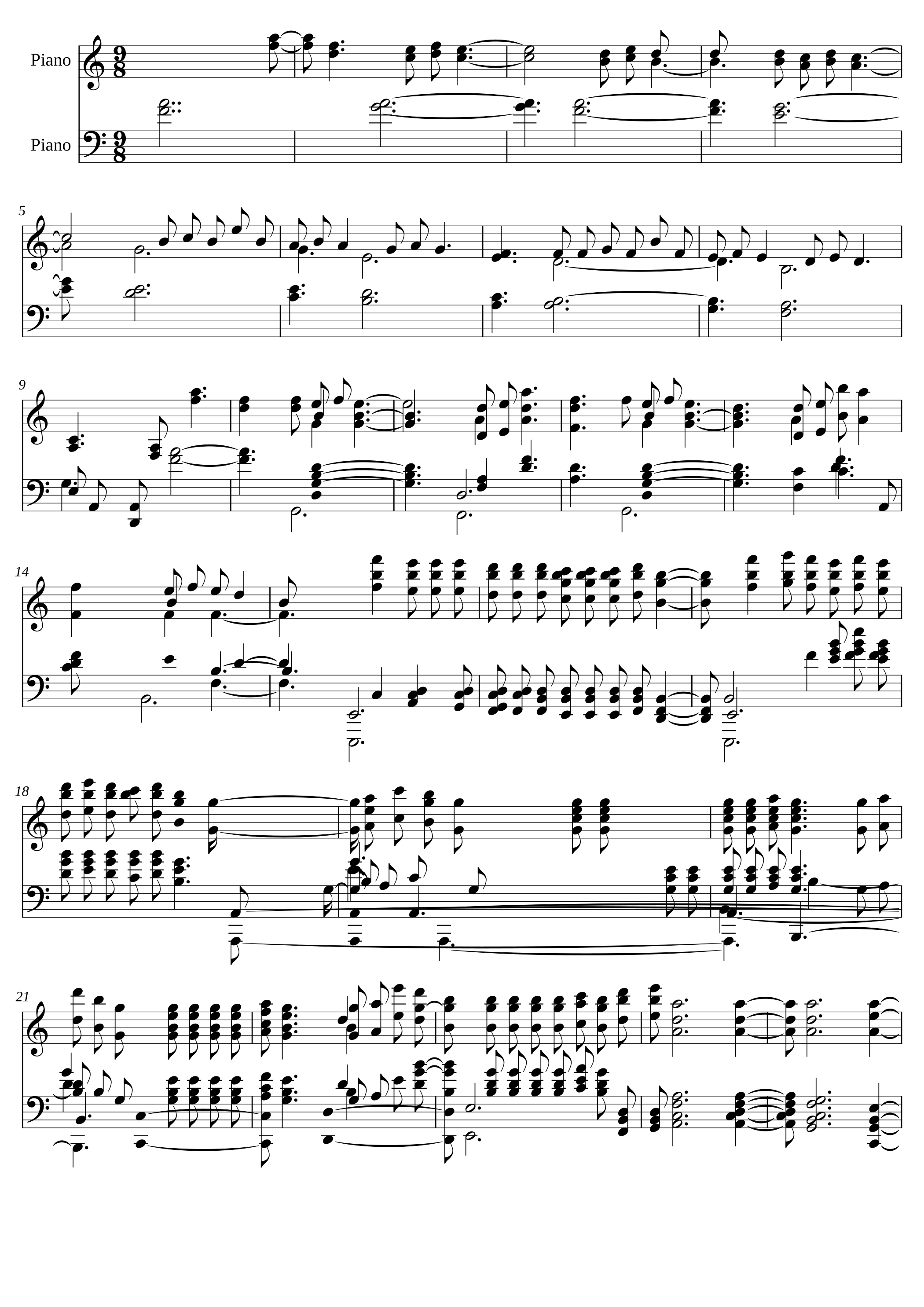
Canon in D page 2
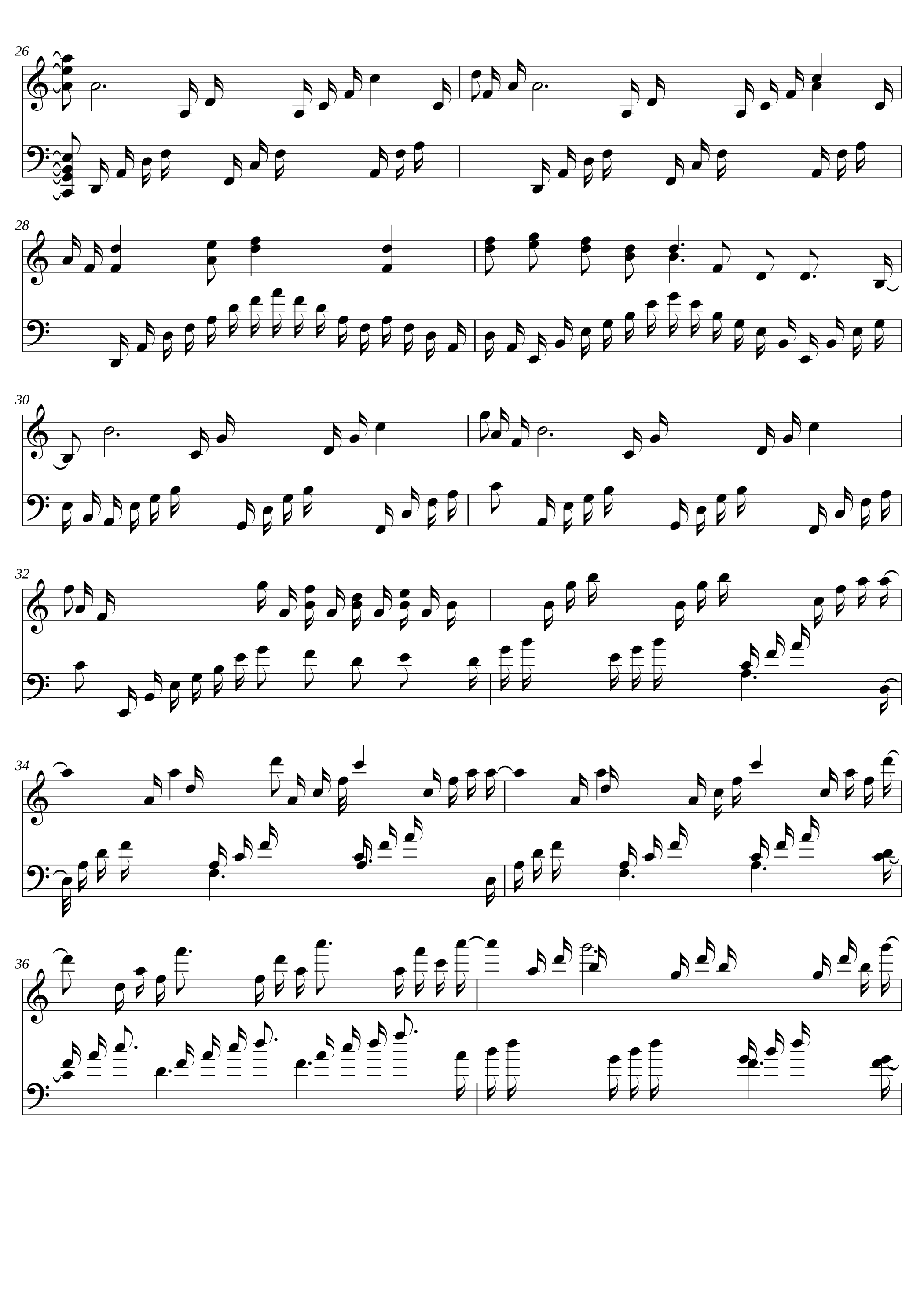
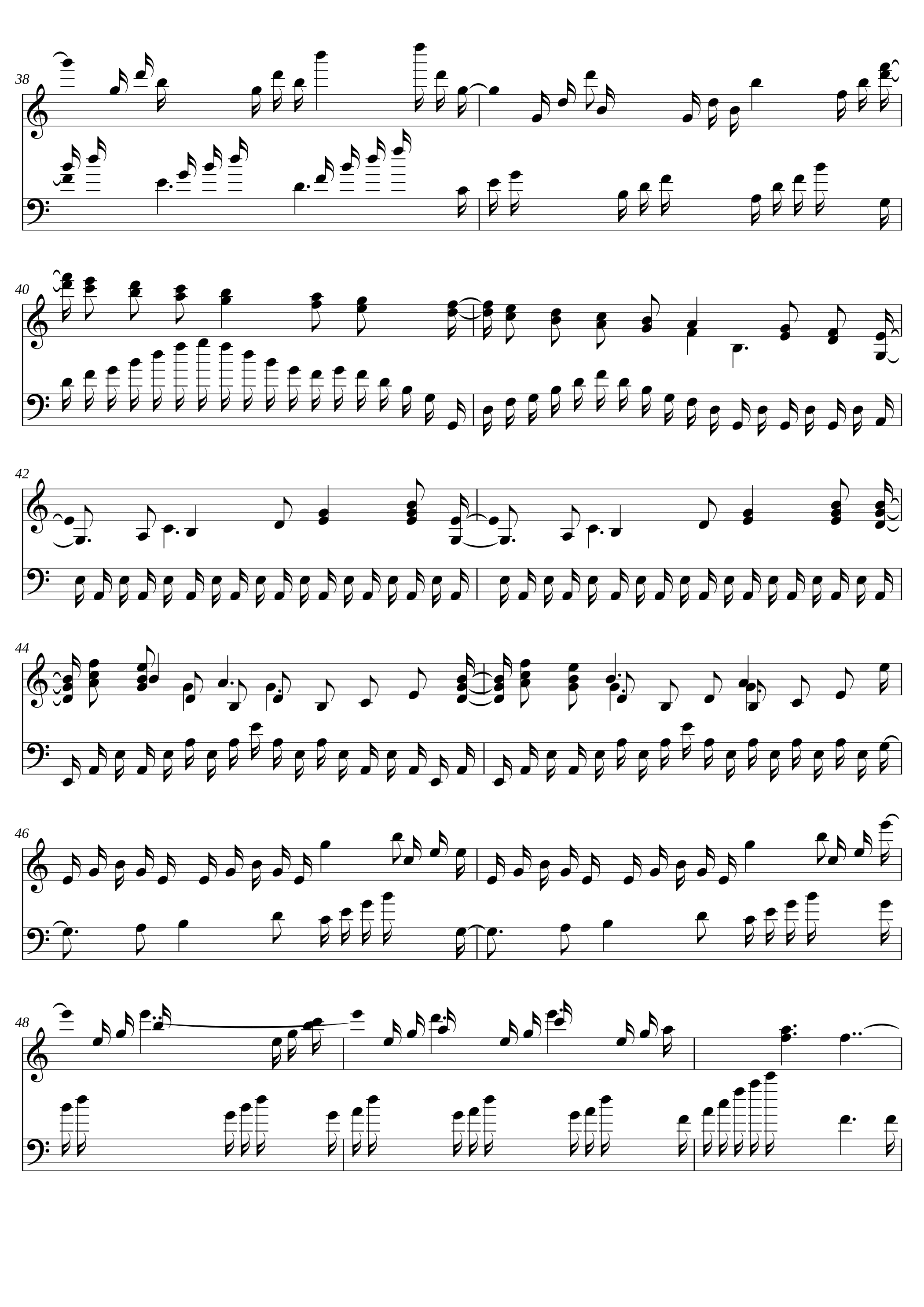
Canon in D page 3
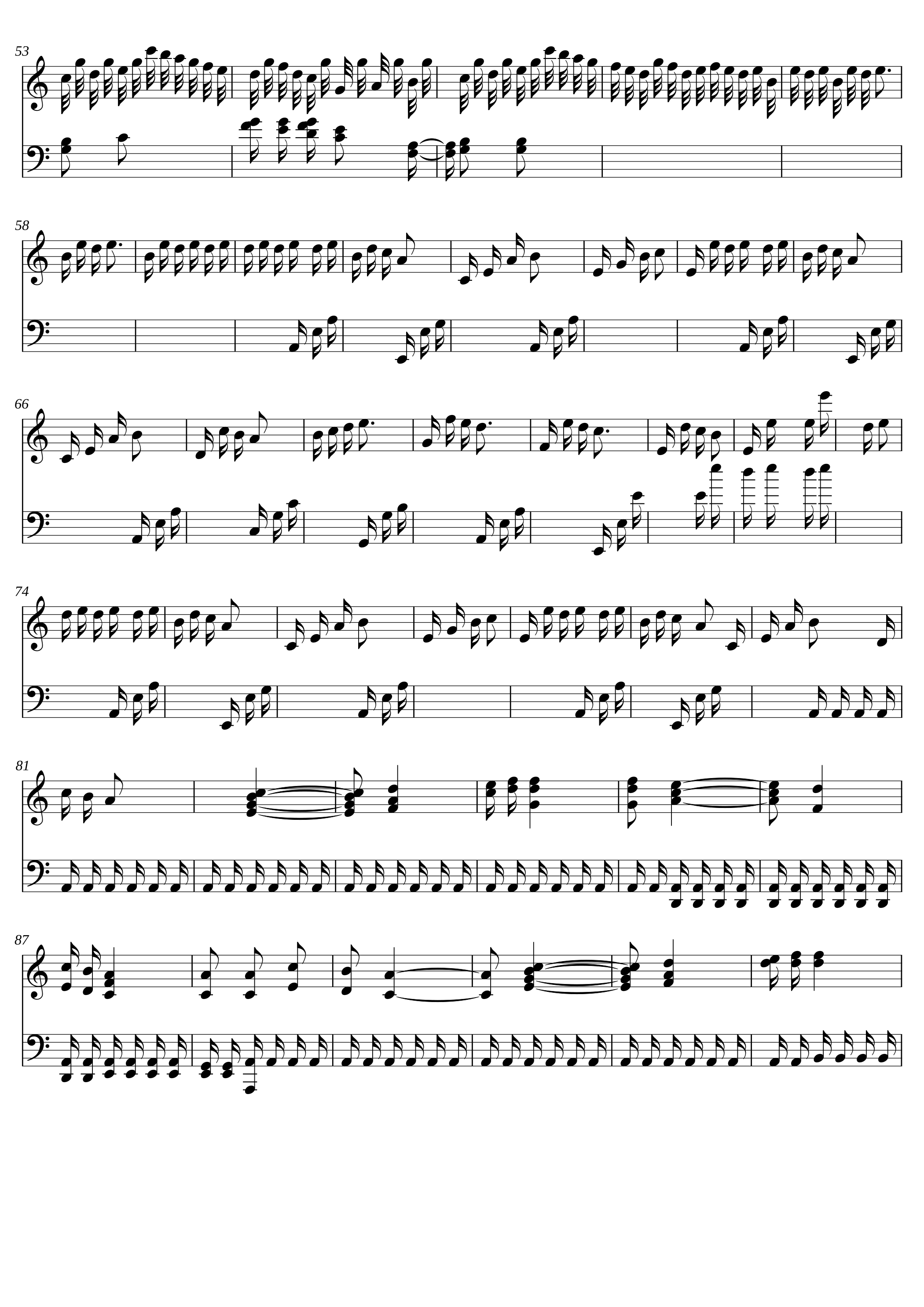
Clair de Lune page 1
Clair de Lune page 2
Clair de Lune page 3
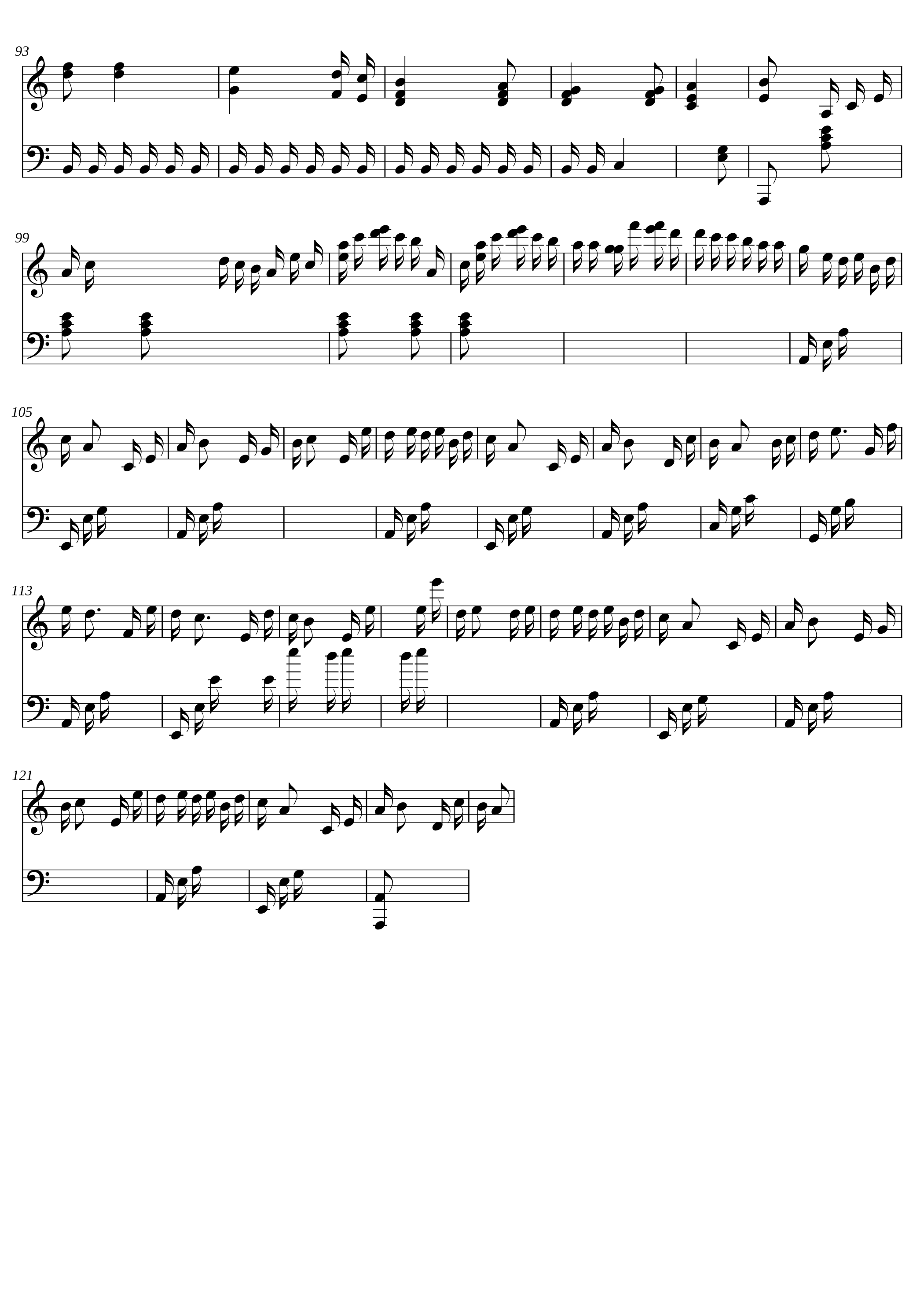
Für Elise page 1
Für Elise page 2
Für Elise page 3
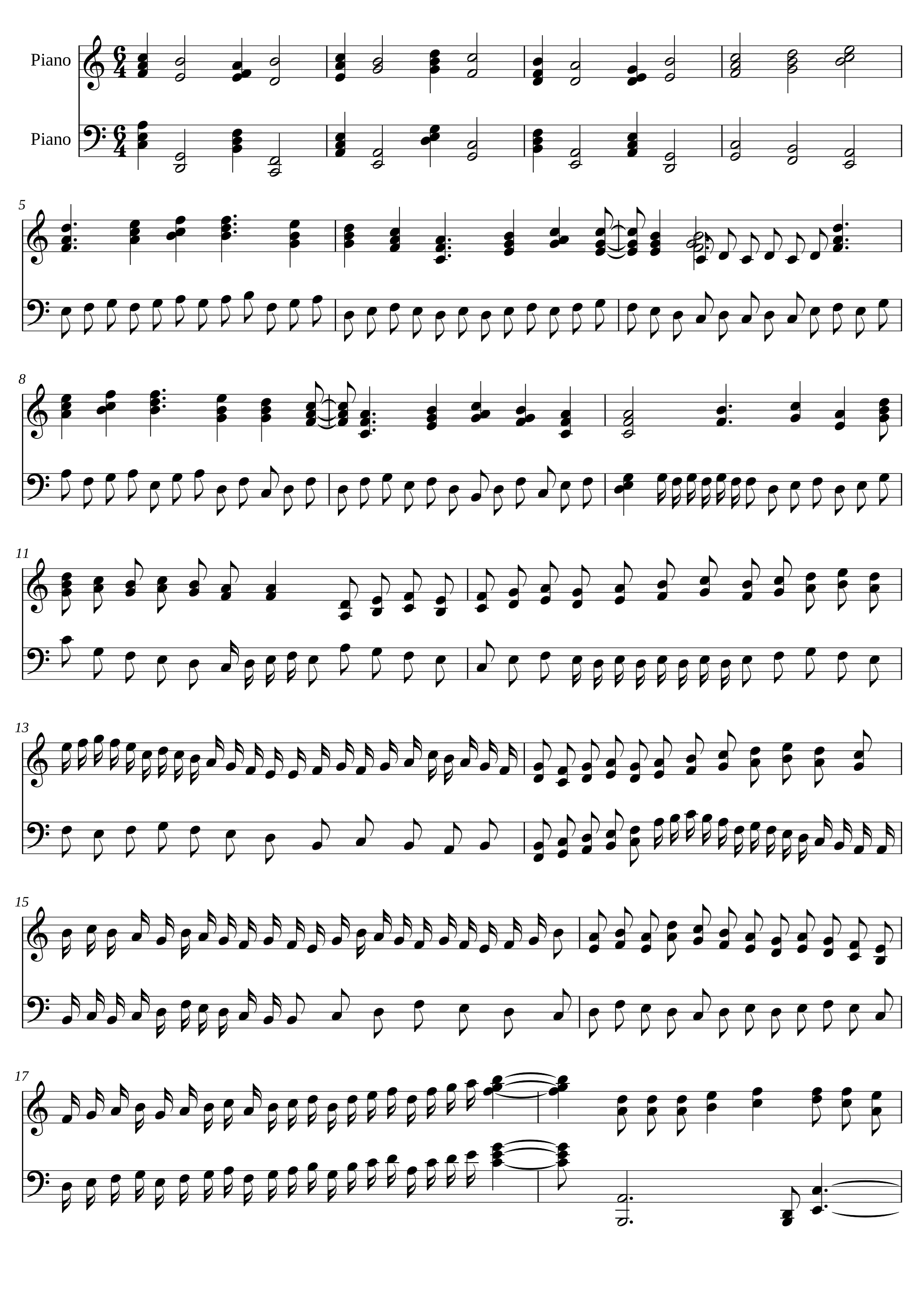
Ode to Joy page 1
Ode to Joy page 2
Ode to Joy page 3
or upload your own MIDI

Drop your MIDI file here

or click to browse

20 credits per render
🎼 MIDI to Sheet Music

MIDI to Sheet Music — AI Notation You Can Actually Sight-Read

Drop in a MIDI file (up to 25 MB, multi-track), get a clean PDF and MusicXML score in 30 seconds — with intelligent phrasing, key/time-signature detection, and per-channel staff splitting that MuseScore's raw import won't do.
Studio desk converting a multi-track MIDI session into a clean piano grand staff sheet music PDF
FEATURES

Engraving Decisions a Machine-Quantized PDF Won't Make

Most MIDI-to-sheet tools dump raw quantization onto a stave. Lacuna's engraver groups notes by musical phrase, splits MIDI channels into instrument-specific staves, and gives you control over the conventions a real engraver would set by hand.
Side-by-side comparison of raw quantized notation versus AI-grouped phrasing on the same MIDI passage

AI-Grouped Phrasing, Not Raw Quantization

Our engraver reads MIDI velocity, articulation, and rest patterns to group notes into musical phrases — so 16th-note runs aren't split into uneven tuplets, and held chords don't fragment into ties. The same MIDI dropped into MuseScore raw will show roughly 30-40% more notation artifacts on a typical 4-minute pop arrangement.
Producer reviewing a multi-staff conductor score generated from a twelve-track MIDI session

Per-Channel Instrument Splitting

Multi-track MIDI files get exported as a real conductor score — MIDI channels become separate staves with their own clef, key, and transposition. Drums route to a dedicated percussion staff, bass-clef instruments auto-switch from treble, and you can re-assign any channel to any staff before export.
Close-up of a key and time signature detection panel showing B-flat major and 6/8 meter

Auto Key & Time Signature Detection

Our analyzer infers the key signature from pitch-class distribution (Krumhansl-Schmuckler profile) and the time signature from beat-stress patterns — so a piece in 6/8 doesn't get notated as 3/4 with awkward tuplets. Override either with one click if the inference is wrong.
Multiple file format thumbnails fanning out from a sheet music page on a designer's screen

PDF, MusicXML, MEI, and PNG in One Pass

A single conversion produces all four engraving formats — print-ready PDF, MusicXML for Sibelius/Finale/MuseScore handoff, MEI for academic archiving, and per-page PNG for slide decks. No re-runs, no separate exports, no watermarks on paid plans.
Four engraving style preview cards showing lead sheet, grand staff, orchestral, and guitar tab layouts

Engraving Style Presets

Choose lead-sheet (melody + chord symbols), grand-staff piano (auto-split between hands), full orchestral, or guitar+tab — each preset adjusts beaming, voicing, and stem direction conventions specific to that ensemble. Built from rules a working engraver would use, not generic defaults.
Stopwatch resting beside a laptop rendering a sheet music page with a thirty second progress indicator

30-Second Turnaround, 25 MB Files

A typical 4-minute multi-track MIDI converts in under 30 seconds — about 12x faster than running it through MuseScore plus manual cleanup. Upload limit is 25 MB (most converters cap at 2 MB), so full-song orchestral exports from your DAW go straight in.
USE CASES

Who's Converting MIDI to Sheet Music

From a session arranger making rehearsal parts to a film composer handing live players a printable score — Lacuna's engraver handles the workflows that generic converters trip over.

Arrangers Making Rehearsal Parts for Live Musicians

DAW-composed song needs to be played by a real band. Drop the MIDI, get per-instrument parts with proper transposition (Bb trumpet, Eb sax) auto-applied — printable in under a minute.

Film & TV Composers Delivering Cue Sheets

A studio asks for a notated cue alongside the audio render. Lacuna outputs a conductor score and individual parts straight from your Cubase or Logic MIDI export, ready to send to the orchestrator.

Piano Teachers Building Method-Book Pages

Record a student exercise on a MIDI keyboard, convert it to grand-staff piano notation, drop into a worksheet PDF the same evening. Phrasing stays musical instead of looking like a Stack Overflow code dump.

Roblox / Sky / Game OST Players Getting Sharable Sheets

Imported a MIDI to your game's music player or recorded it through a virtual instrument. Convert it to a clean sheet PDF you can share in a community Discord without watermarks.

Music Theory Students Annotating MIDI Exports

Working through a Bach chorale or jazz transcription in Logic or Ableton. Generate the engraved score, add Roman numeral analysis on top, hand in as a PDF instead of an SVG screenshot.

Songwriters Sending Demo Charts to Collaborators

Wrote a verse on your MIDI controller, want to send your bandmate a lead sheet — melody, chord symbols, no piano roll screenshots. Pick the lead-sheet preset, export, drop in the group chat.

FAQ

Frequently Asked Questions

Specific answers to what r/musictheory, Stack Exchange Music, and the Ableton Live Users group keep asking.
Yes, but quality depends on how the converter handles **phrasing, quantization, and channel routing** — not just on the MIDI file itself. Lacuna's engraver uses AI-grouped phrasing (reading velocity and rest patterns) so 16th-note runs and held chords don't get fragmented into ties. On a typical 4-minute MIDI arrangement, this removes roughly **30-40% of the notation artifacts** you'd see from a raw MuseScore import.
MuseScore opens MIDI files but treats them as **raw quantized data** — every short note becomes a separate visual element, ties multiply, and rests appear inside chords. Lacuna pre-processes the MIDI with phrasing grouping, key/meter detection, and per-channel staff splitting before engraving, then exports MusicXML you can still open in MuseScore for final hand-tweaking.
Free accounts can upload up to **10 MB per file**; paid plans extend to **25 MB**. For reference, a full 4-minute multi-track orchestral MIDI export from Logic Pro is typically 200-800 KB, so the limit handles complete songs without splitting tracks.
Every conversion produces: - **PDF** — print-ready, multi-page, no watermark on paid plans - **MusicXML** — open in Sibelius, Finale, Dorico, or MuseScore for further editing - **MEI** — for academic and library archival workflows - **PNG** — per-page raster for slides, blog posts, or Discord previews
Lacuna detects the key signature using the **Krumhansl-Schmuckler pitch-class profile** and the time signature from beat-stress patterns — accurate on roughly **92%** of common-practice and pop MIDI files. If the inference is wrong (a piece in 6/8 detected as 3/4, for example), one click overrides it before export.
A typical 4-minute multi-track MIDI converts in under **30 seconds**, including PDF rendering and MusicXML/MEI/PNG export. The same file run through MuseScore plus manual phrasing cleanup usually takes 6-10 minutes.
Yes — channel 10 (General MIDI percussion) auto-routes to a **dedicated drum staff** with standard drum-notation conventions (kick on the bottom space, snare on the middle line, hi-hat on top). Other percussion channels can be remapped manually to any staff line.
Yes, on **paid plans**. Output (PDF, MusicXML, MEI, PNG) is free for personal and educational use across all tiers; commercial licensing — selling sheets, including them in published method books, distributing for paid live performance — requires a paid Lacuna plan. The exported notation itself contains no Lacuna watermark on any paid tier.
Yes — uploads are stored encrypted at rest and **auto-deleted within 24 hours** after processing. We do not use your MIDI files to train any model, and the conversion runs server-side without third-party AI APIs.
Free for personal projects. No watermark on paid tiers. Drop in up to 25 MB, get PDF + MusicXML + MEI + PNG in one pass.

Convert Your First MIDI File in 30 Seconds

Encrypted Uploads
30-Second Engraving
No credit card requiredFree credits includedMIDI files auto-deleted in 24 hours
Specific workflow notes from people who switched off raw MuseScore import.

What Composers and Arrangers Say

Cut a 7-minute orchestral cue from Cubase to a printable conductor score in 28 seconds — used to take me 40 minutes of hand-fixing ties in Sibelius. The phrasing grouping on the woodwind runs is the part that sold me.
Ethan Park
Composer & Orchestrator at Resonance Records (Brooklyn)
I teach piano method books and used to screenshot piano roll into Pages. Now I drop the student's MIDI take, pick grand-staff preset, and the worksheet PDF is done before the next lesson starts.
Maya Chen
Piano Pedagogy Lead at Vermont Conservatory
Tried MuseScore, melobytes, and miditoolbox for a 12-channel film MIDI. Only Lacuna split the channels to per-instrument staves correctly without me having to remap. The Bb transpositions on the trumpets were already right.
Dario Vega
Film Composer for Sundance-screened shorts
Phrasing groups still need a small clean-up on jazz swing 8ths, but the key/meter detection nailed 9 out of 10 files I tested. Saves me about 6 minutes per chart compared to importing into Finale raw.
Tomás Reyes
Big-Band Arranger, NYC freelance
I record Sky Children of the Light covers on a MIDI keyboard and post sheets to our Discord. Lacuna's PDF export is the only one I've found that doesn't watermark and keeps the grand staff readable.
Riya Patel
Sky Music Community Mod (Discord, 12k members)
For ear-training homework I render Bach chorale MIDIs from Logic and need clean PDFs to annotate Roman numerals on. The MEI export also let me drop the file straight into Verovio for the class website.
Hannah Voss
Music Theory PhD candidate, UNC Chapel Hill