
01
DJs and mixers
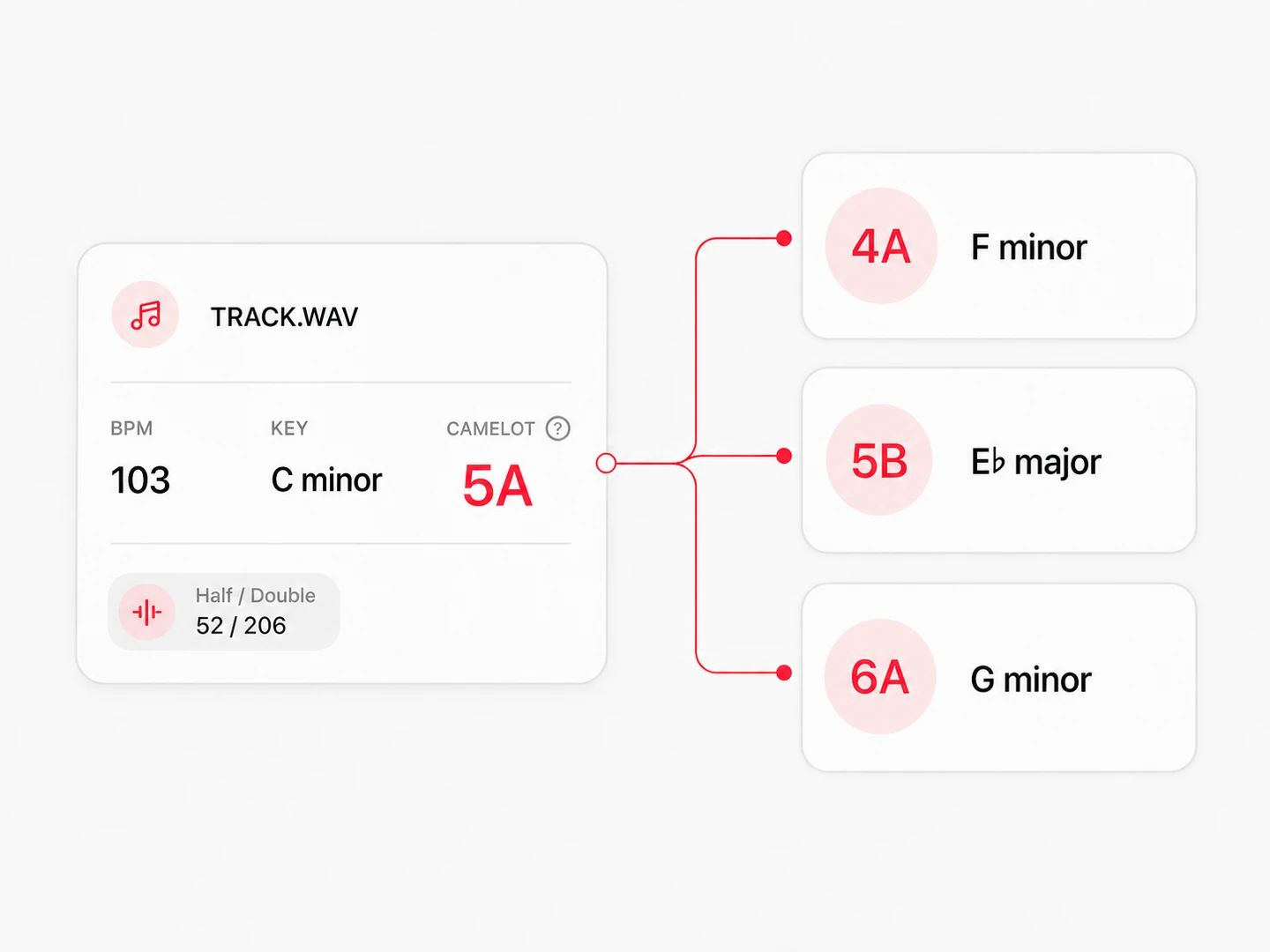
Camelot codes and compatible keys for harmonic mixing, plus half- and double-time readings for beatmatching across genres.
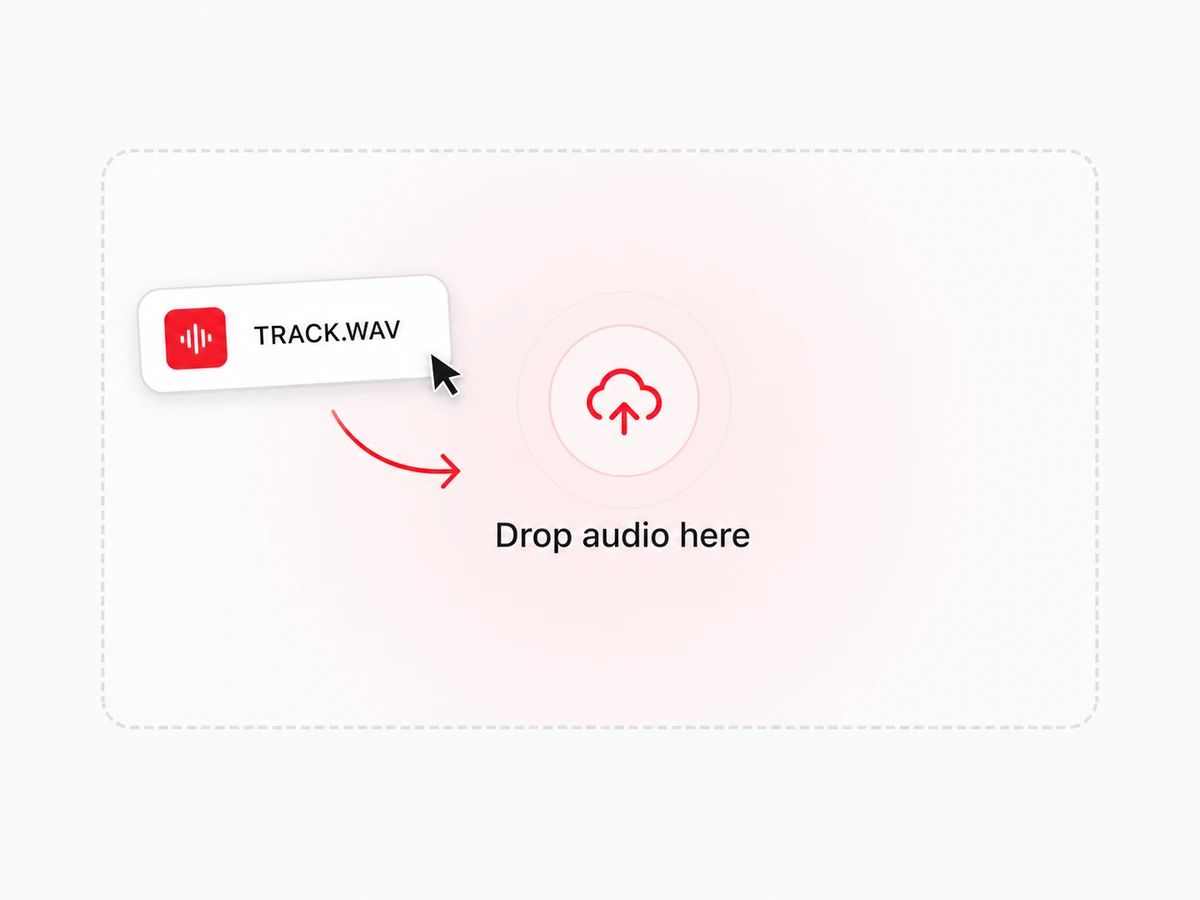
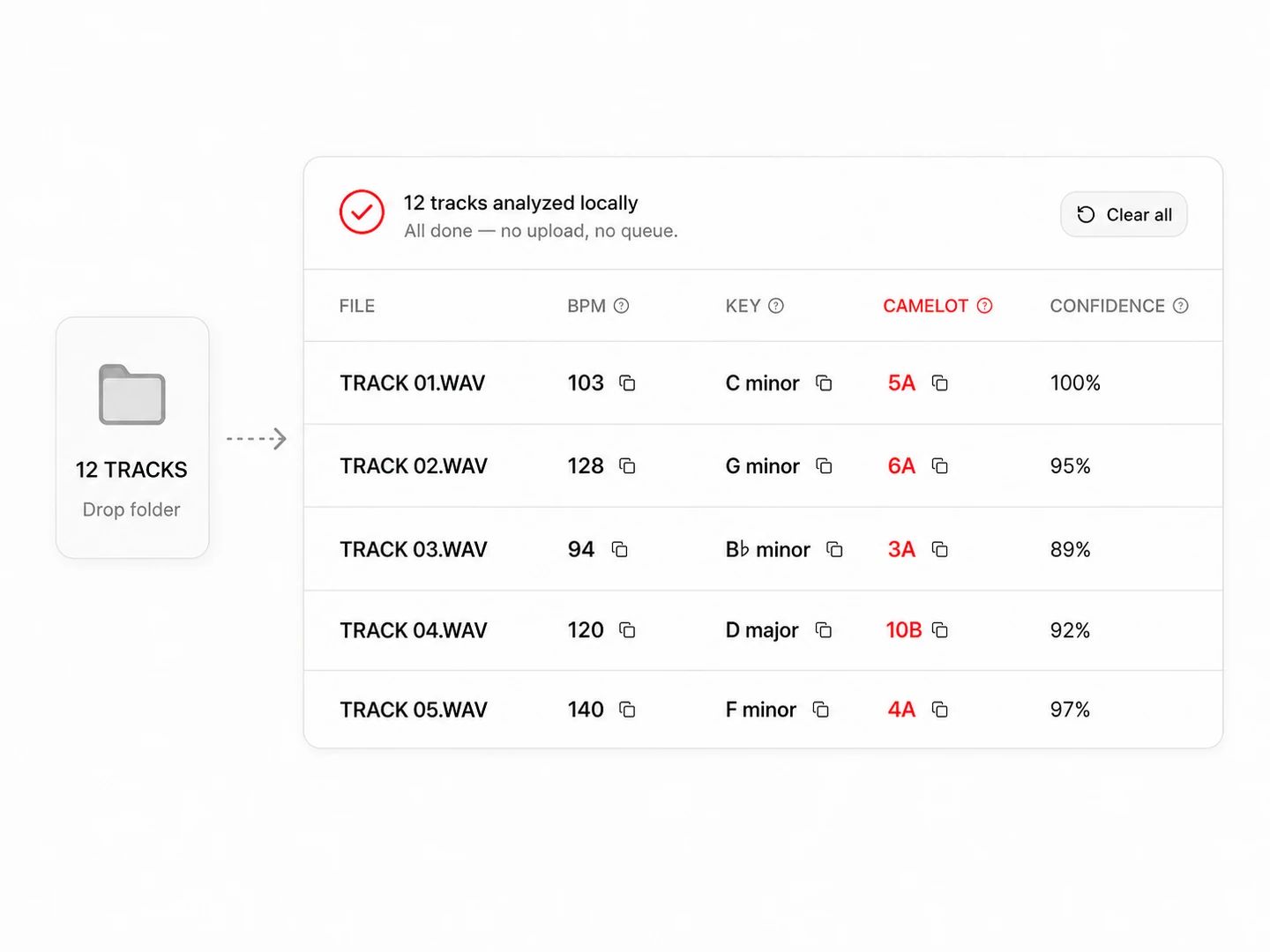
Drop in one file or a whole folder. Key, scale, tempo and Camelot code come back in a few seconds — the audio never leaves your device.
Analysis runs in your browser. Nothing is uploaded, and no account is needed.
Pick one track or select a whole batch. The tempo finder reads MP3, WAV, M4A, FLAC, OGG and AAC — and the file stays on your device, because the analysis engine runs inside the page.
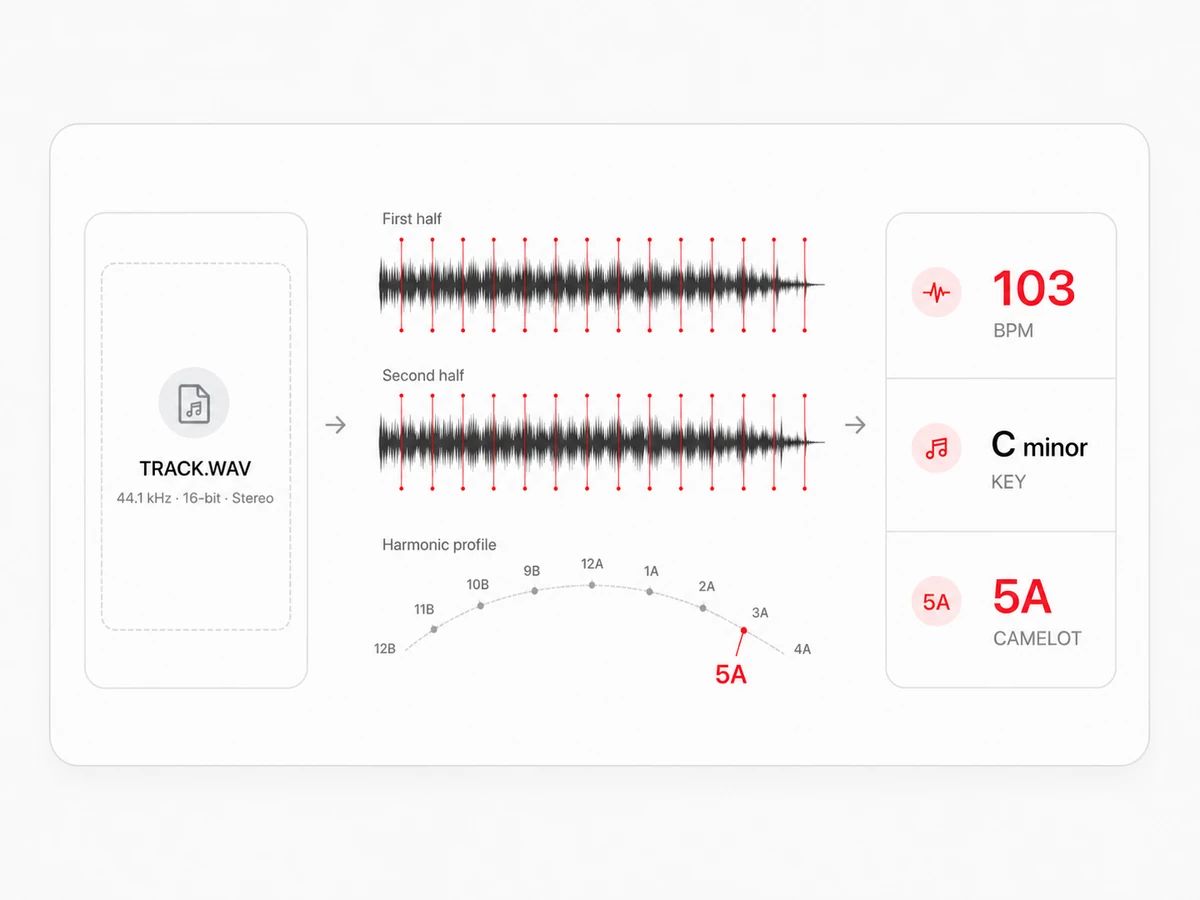
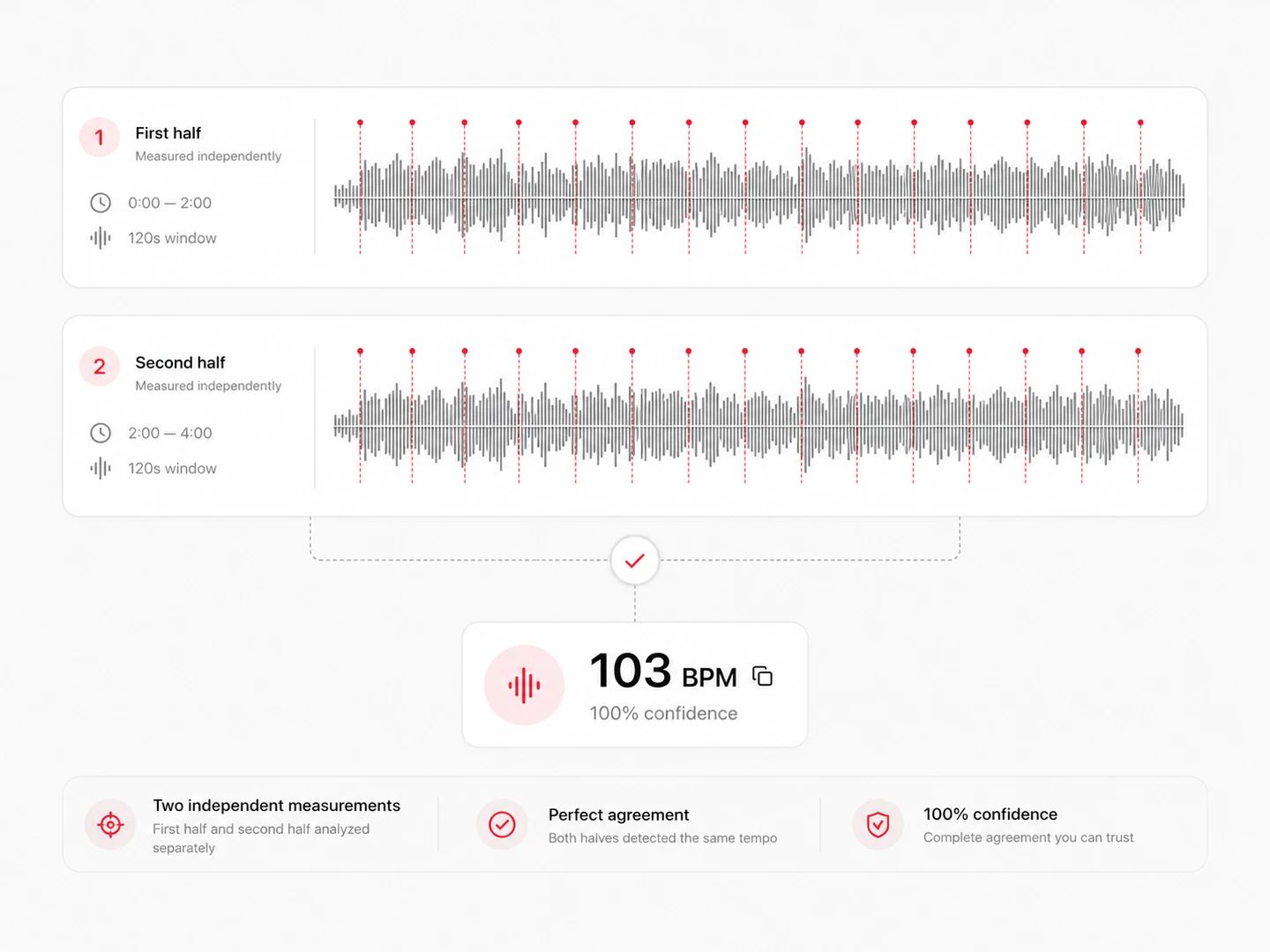
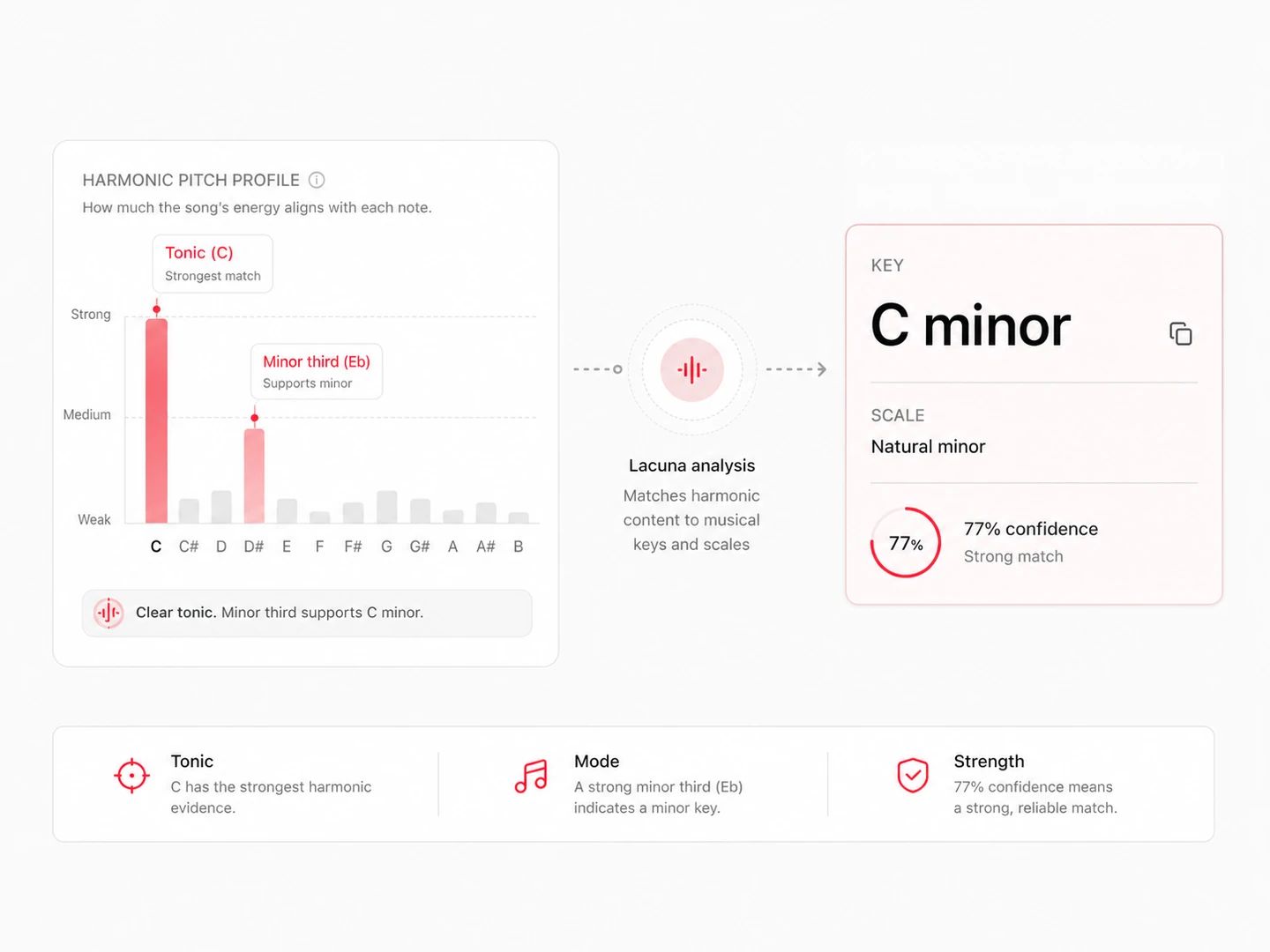
The BPM detector measures the beat grid twice and compares the two readings, while the key detector estimates the tonic and scale from the harmonic content. A few seconds per song.
Copy the tempo and key straight into your DAW or crate notes, read the Camelot code for harmonic mixing, or jump to the key changer to move the track somewhere else.
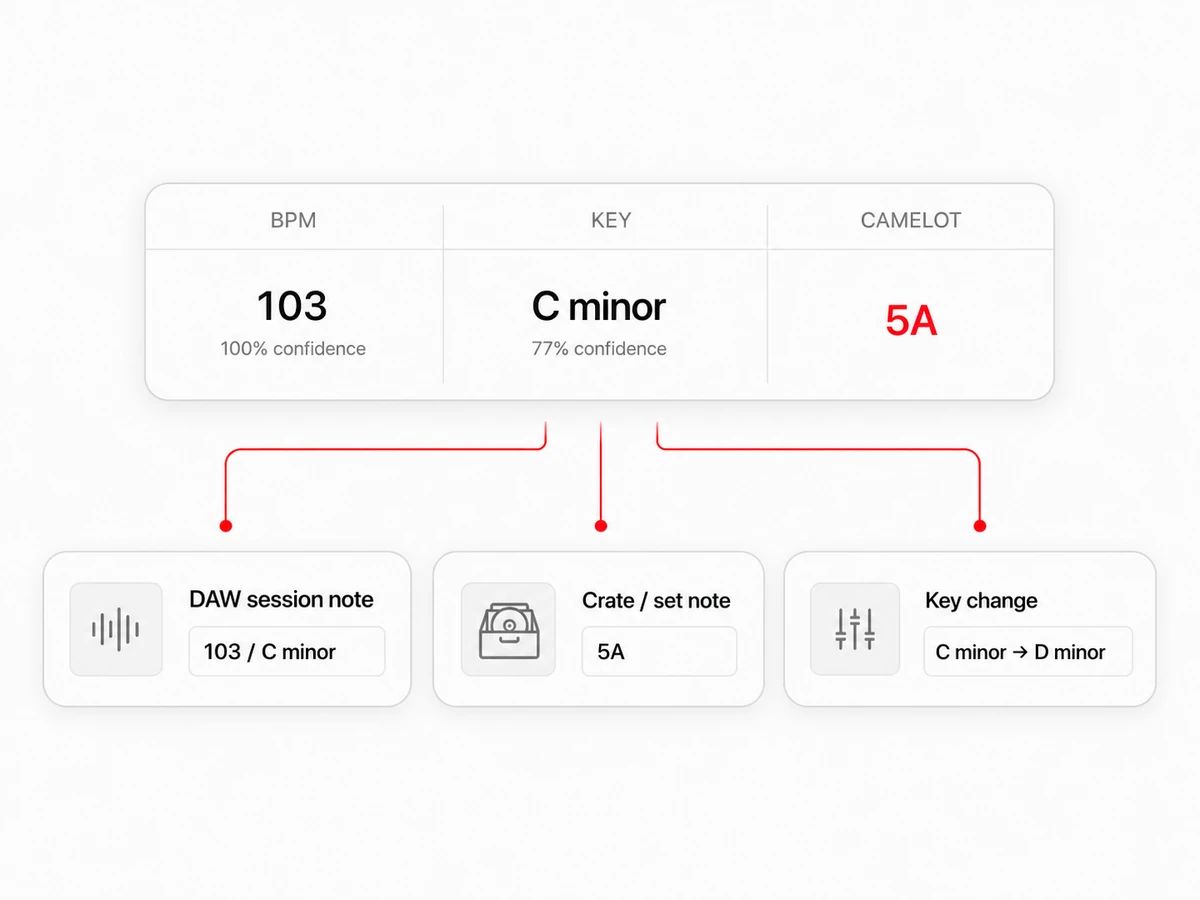
Tempo and key are only worth reading if the next step depends on them.
Camelot codes and compatible keys for harmonic mixing, plus half- and double-time readings for beatmatching across genres.
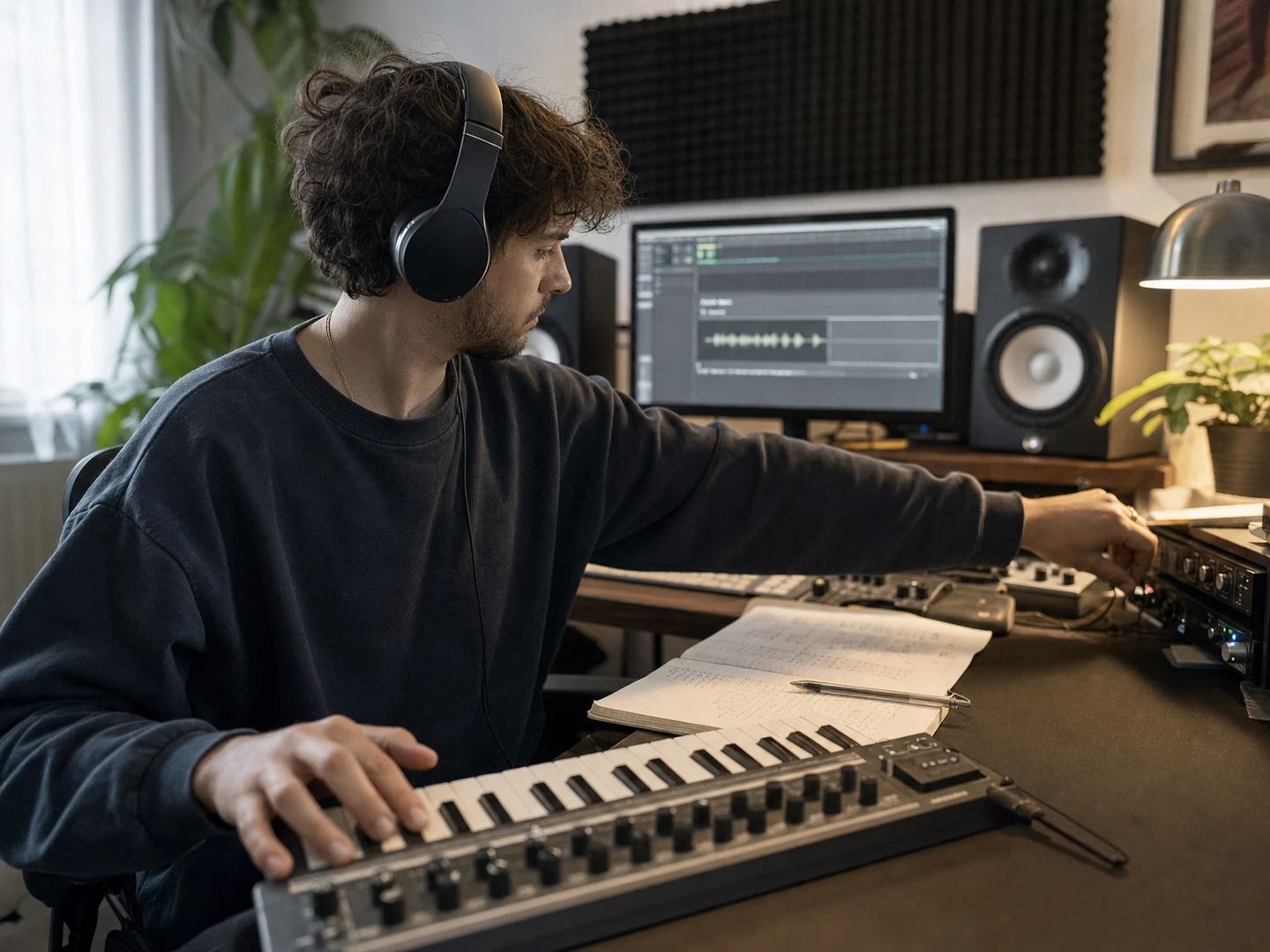
Get a sample's key and tempo before it goes into the session, so it lands in tune with everything already on the timeline.

Find out immediately whether two tracks can sit together, and how many semitones one of them has to move.
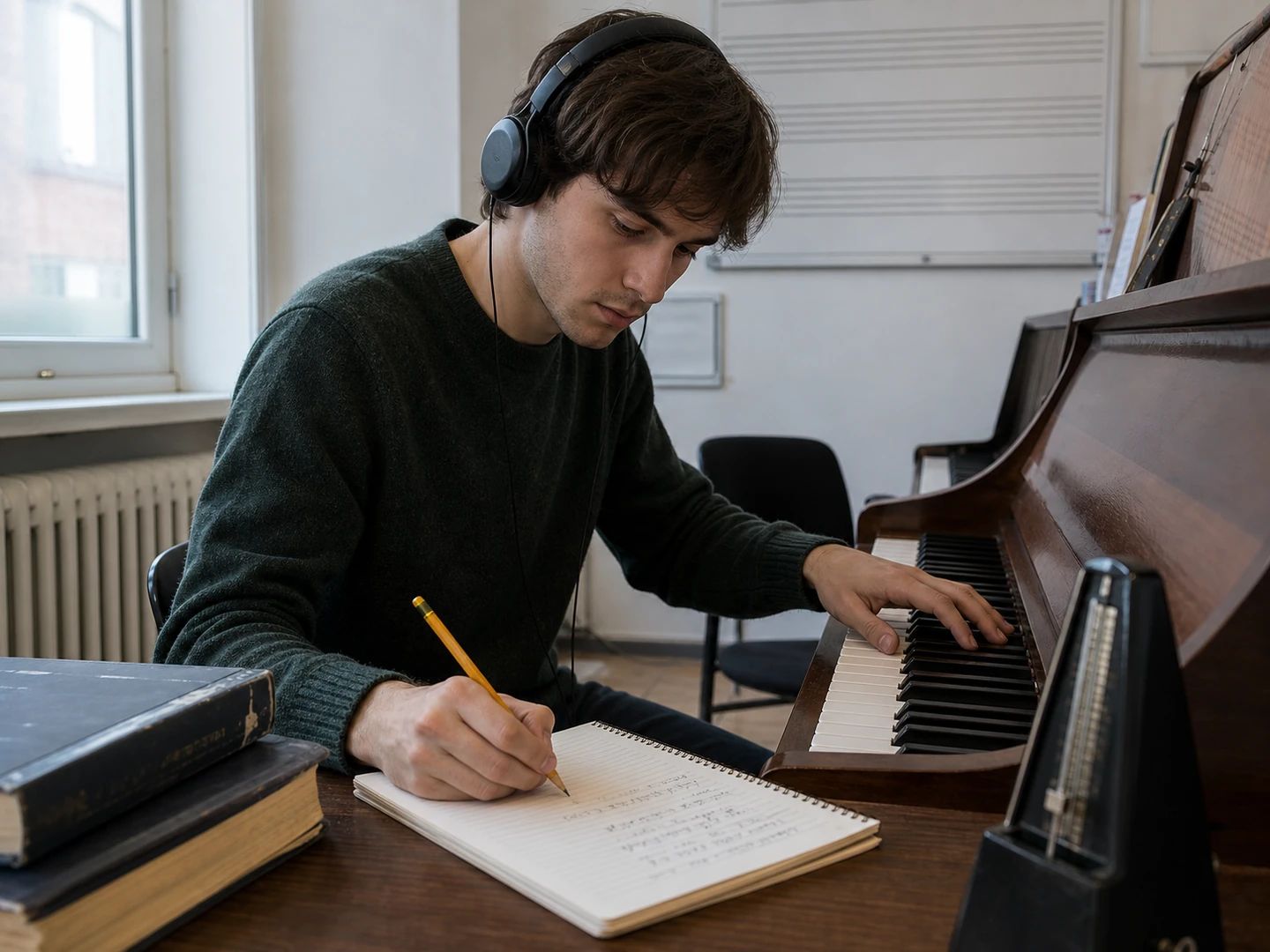
Use real records to practise hearing tonic, mode and tempo — then check yourself against the analysis.
Drop the audio file into the analyzer above. It reads the beat grid out of the waveform and reports the tempo in beats per minute, along with the half-time and double-time readings. If you do not have the file — the song is on the radio, or in a room — tap the tempo instead.
Two ways, depending on what you have. With the audio file, an automatic BPM finder like this one is faster and more precise than counting. Without it, tap along to the beat and let a tap tempo tool average your taps.
Drop it in and the key detector reads the tonic and the mode — for example A minor or E♭ major — from the track's harmonic content, and shows how strongly the audio supports that reading.
By ear, you would find the note the song resolves to and decide whether the third above it is major or minor. This song key finder does the same thing statistically: it builds a pitch profile across the track and matches it against all 24 keys.
A numbering system for harmonic mixing. Each key gets a number from 1 to 12 and a letter — A for minor, B for major — so 8A is A minor and 8B is C major. Any two tracks whose codes share a number, or sit one number apart on the same letter, will mix in tune.
Because tempo can be counted at more than one level, and both readings are musically correct. Drum and bass at 174 BPM is often counted at 87; a slow hip-hop beat written at 70 gets counted at 140. Every result here shows both, so you can pick the one your session uses.
Key and tempo detection are estimates, not measurements — no tool in this category is exact. This one reads a window from the middle of the track, cross-checks the tempo across two halves, and shows you the agreement so a shaky result is visible rather than hidden behind a confident-looking number.
No. The analysis engine is WebAssembly running inside this page, so the audio is decoded and measured on your own machine. Nothing is sent to a server, which is also why there is no queue and no cap on how many files you analyse. The one ceiling is 50 MB per file, because your browser has to hold it in memory.
It is free and there is no account. Analyse as many tracks as you like — since the work happens in your browser, it costs us nothing to run.
A free BPM and key finder with Camelot codes and compatible keys, running entirely in your browser.